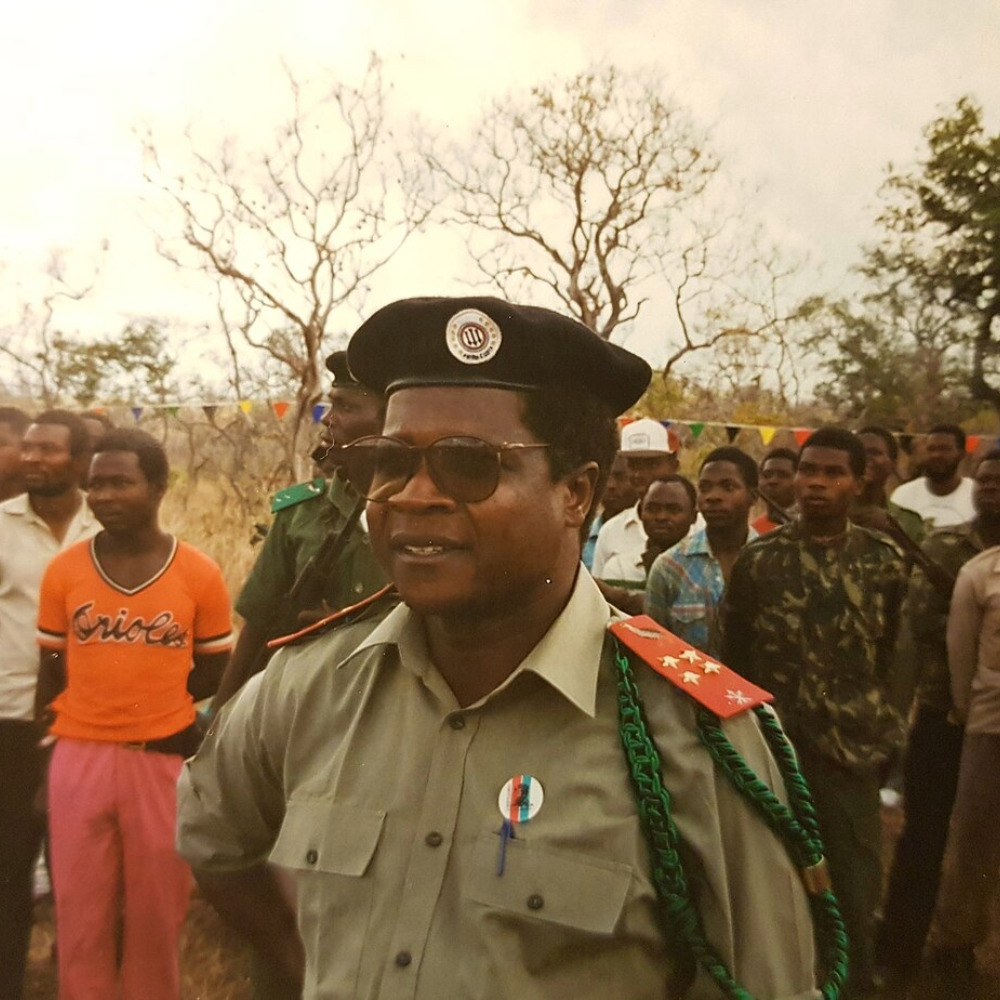
Mozambique’s Civil War: From Revolution to Reconciliation
Mozambique’s Civil War, fought from 1977 to 1992, was one of the most destructive and politically complex conflicts in post‑colonial Africa. Emerging in the aftermath of Portuguese colonial rule, the war pitted the ruling FRELIMO government against the rebel movement RENAMO, drawing in regional powers and Cold War actors. The conflict devastated Mozambique’s economy, displaced millions, and left deep scars — but it also produced one of Africa’s most successful peace agreements.
From Colonial Rule to Independence

FRELIMO and RENAMO territories
Map of Mozambique situation in 1994. Image Ref: Wikipedia
Mozambique gained independence from Portugal in 1975, following the Carnation Revolution that ended decades of authoritarian rule in Lisbon. The liberation movement FRELIMO (Front for the Liberation of Mozambique) assumed power and began transforming the country into a socialist state.
However, independence came with enormous challenges:
- A collapsed colonial economy
- Mass departure of Portuguese settlers
- Limited administrative capacity
- Regional instability fueled by apartheid South Africa and Rhodesia
These pressures created fertile ground for conflict.
The Rise of RENAMO and the Outbreak of War
In 1977, civil war erupted when RENAMO (Mozambican National Resistance) launched an armed rebellion against the FRELIMO government. RENAMO was initially created and supported by Rhodesian intelligence services to destabilize Mozambique for supporting Zimbabwean liberation movements. After Rhodesia’s fall in 1980, apartheid South Africa became RENAMO’s primary backer.
RENAMO’s goals evolved over time:
- Undermining FRELIMO’s socialist policies
- Gaining political power
- Controlling rural territories
- Disrupting regional liberation movements
The conflict quickly spread across the country, with RENAMO targeting infrastructure, villages, and transportation networks to weaken the government.
A Brutal and Devastating Conflict
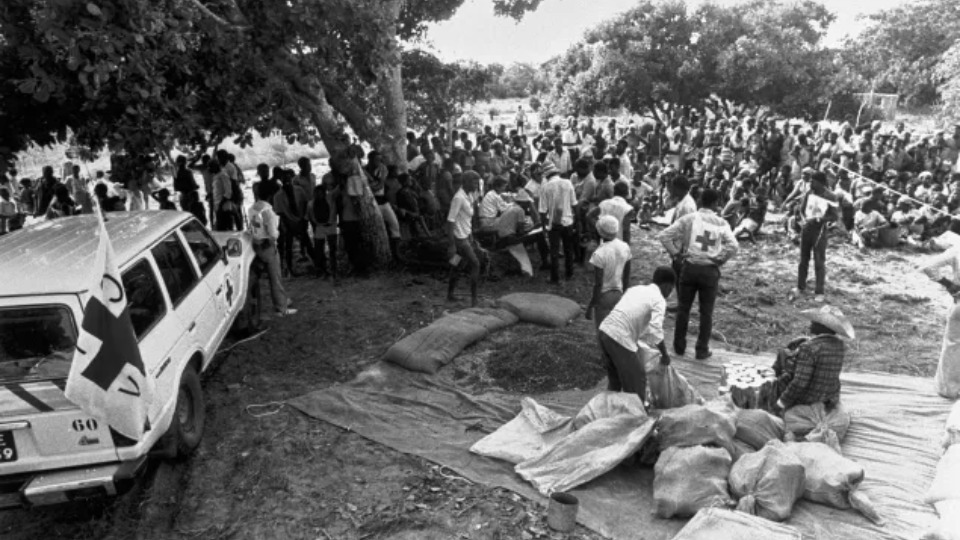
International Commitee of the Red Cross Humanitarian Efforts in Mozambique
Image Ref: icrc.org
Mozambique’s Civil War became notorious for its humanitarian toll. Both sides committed abuses, but RENAMO in particular was widely documented for forced recruitment, attacks on civilians, and destruction of essential services.
The war’s impact was catastrophic:
- Over 1 million deaths, mostly from famine and disease
- 4 million displaced people
- Destruction of schools, hospitals, and roads
- Collapse of agricultural production
- Widespread landmine contamination
By the late 1980s, Mozambique was one of the poorest and most war‑torn countries in the world.
Regional and International Dimensions
The war was deeply shaped by Cold War politics:
- FRELIMO received support from the Soviet Union, Cuba, and other socialist states.
- RENAMO was backed by apartheid South Africa and, indirectly, by Western interests seeking to counter Soviet influence.
As the Cold War ended, external support for both sides weakened. Regional diplomacy — especially through Zimbabwe, Malawi, and Tanzania — helped push the parties toward negotiation.
The Rome General Peace Accords (1992)
After years of mediation led by the Community of Sant’Egidio, an Italian Catholic peace organization, FRELIMO and RENAMO signed the Rome General Peace Accords on October 4, 1992.
The agreement included:
- A ceasefire
- Demobilization of forces
- Integration of RENAMO fighters into the national army
- Multiparty elections
- UN peacekeeping support (ONUMOZ)
The peace process is widely considered one of Africa’s most successful, with Mozambique transitioning to democratic elections in 1994.
Legacy and Path to Recovery
Mozambique’s post‑war recovery has been remarkable. The country experienced rapid economic growth in the 2000s, rebuilt infrastructure, and expanded political participation. However, challenges remain:
- Periodic tensions with RENAMO
- Uneven development
- Natural disasters
- Recent insurgency in Cabo Delgado (unrelated to the civil war)
Still, the 1992 peace agreement stands as a powerful example of reconciliation, dialogue, and long‑term peacebuilding.
References
Mozambique Civil War. Encyclopaedia Britannica. https://www.britannica.com/event/Mozambique-Civil-War
Mozambique: War, Peace, and Reconstruction. International Crisis Group. https://www.crisisgroup.org
Rome General Peace Accords (1992). United Nations Peacemaker. https://peacemaker.un.org/mozambique-general-peace-accords-1992
Mozambique Profile – Timeline. BBC News – Africa. https://www.bbc.com/news/world-africa-13890416

latest video

nia via inbox
Stay connected. Subscribe and get updated on what's new with Nia!