Trade Markets – The Trans Saharan
The Trans‑Saharan trade was a medieval network of camel‑caravan routes linking West African polities to North Africa and the Mediterranean; it moved gold, salt, ivory, kola, and enslaved people, powered empires like Ghana, Mali, and Songhai, and was periodically disrupted by political violence, environmental change, and the rise of maritime alternatives JSTOR.
An Overview
The Trans‑Saharan system connected Sahelian and forest zones of West Africa with Maghreb and Mediterranean markets via long camel caravans. Major political actors included the Ghana (Wagadu), Mali, and Songhai empires in the interior and various North African polities and merchant cities that organized and financed desert crossings. Nomadic and oasis communities (including Tuareg groups) controlled desert passages and often acted as guides, toll‑collectors, and occasional spoilers of trade New World Encyclopedia.
Key Markets and Hubs
Principal hubs on the southern edge of the Sahara were Timbuktu, Djenné, Gao, and Niani; northern nodes and caravan bases included Sijilmasa, Taghaza, Oualata, and Bilma. These towns functioned as aggregation points where forest and savanna products were exchanged for North African manufactures, salt, and luxury goods; control of these hubs produced fiscal revenue and political leverage for regional rulers historyrise.com.
Commodities and economic mechanics
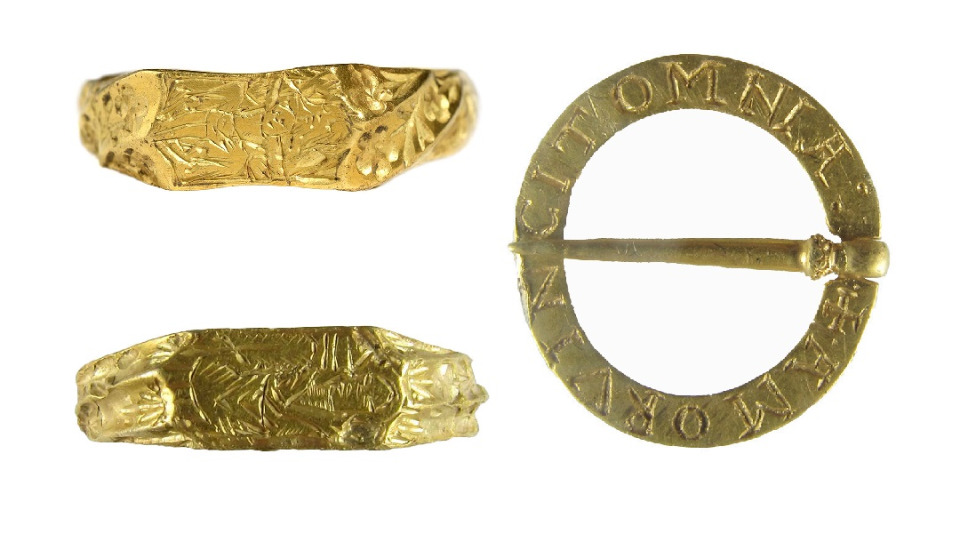
Medieval Gold Jewelry
Source: https://colchester.cimuseums.org.uk/westafricangold/
The backbone commodities were gold (northbound) and salt (southbound); other important exports included ivory, kola nuts, hides, and enslaved people, while imports included textiles, metalware, glass, horses, and Islamic books and clerical expertise. Taxation of caravans and control of mines and oases converted trade flows into state revenue, funding armies, urban patronage, and scholarly institutions in cities like Timbuktu historyrise.com.
Major negative shocks and disruptions
- Political violence and raids. Recurrent raids, rebellions, and the militarized control of desert corridors—often involving Tuareg confederations and local strongmen—could interrupt caravan safety and raise costs, reducing trade volume and shifting routes JSTOR New World Encyclopedia.
2. Environmental stress. Periodic droughts, desertification, and changing rainfall patterns made some routes less viable and increased the logistical risk and cost of long crossings, undermining the reliability of supplies and caravan schedules TutorChase.
3. External military intervention. The late‑16th‑century Moroccan invasion of the Songhai heartland (1590–91) shattered centralized control of key Niger‑valley hubs and contributed to long‑term fragmentation that damaged trans‑Saharan commerce Wikipedia.
4. Maritime competition and European expansion. From the 15th century onward, Portuguese maritime routes and fortified coastal trading posts (e.g., Elmina) began diverting gold, ivory, and later enslaved people toward Atlantic channels, reducing the relative importance of overland Saharan routes and altering regional trade balances Britannica Lowcountry Digital History Initiative.
5. Epidemics and wider Afro‑Eurasian shocks. Periodic pandemics and broader disruptions to Eurasian demand could depress luxury trade and interrupt merchant networks, compounding local political and environmental stresses UNESCO.
Long term effects and legacy
These shocks combined to weaken state control of caravan taxation, encourage the growth of Atlantic coastal trade, and shift economic gravity away from some classic Saharan hubs. Yet the Trans‑Saharan system left enduring legacies: urbanization in the Sahel, the spread of Islam and Arabic literacy, and institutional forms of taxation and long‑distance commerce that shaped West African polities for centuries historyrise.com.
References
- Nehemia Levtzion & J. F. P. Hopkins (eds.), Corpus of Early Arabic Sources for West African History, Cambridge University Press.
- John O. Hunwick (ed.), Timbuktu and the Songhay Empire: Al‑Saʿdī’s Taʾrīkh al‑Sūdān down to 1613 and other contemporary documents, Brill.
- David C. Conrad, Empires of Medieval West Africa: Ghana, Mali, and Songhay, Facts on File.
- Paul E. Lovejoy, Transformations in Slavery: A History of Slavery in Africa, Cambridge University Press.
- Michael A. Gomez, African Dominion: A New History of Empire in Early and Medieval West Africa, Princeton University Press.
- The Cambridge History of Africa, Volumes covering the medieval Sahel and Sahara, Cambridge University Press.
- Ibn Battuta, travel accounts (editions and translations) for contemporary observations on trans‑Saharan and North African trade.
- Encyclopaedia Britannica, entries on “Trans‑Saharan trade,” “Timbuktu,” “Ghana (Wagadu),” “Mali Empire,” and “Songhai Empire.”
- UNESCO and major museum publications on Timbuktu, Djenné, and Sahelian urbanism (for archaeological and conservation perspectives).

latest video

nia via inbox
Stay connected. Subscribe and get updated on what's new with Nia!