Sundiata Keita – A Biography
Sundiata Keita (c. 1217–c. 1255) founded the Mali Empire and, through military victory and political consolidation, laid the territorial and institutional foundations that made Mali a dominant West African power in the 13th century.
Beginnings and accession
Sundiata Keita was born into the Keita clan and rose from a troubled childhood to become the leader who united the Mandinka peoples. He is traditionally credited with defeating the Sosso king Sumanguru at the Battle of Kirina (c. 1235) and establishing the political core of the Mali Empire, moving the capital to Niani and consolidating control over surrounding polities Wikipedia.
The Epic and historicity
Much of Sundiata’s life is known through the Epic of Sundiata, an oral tradition preserved by Mandinka griots that blends history, myth, and moral instruction. While the epic contains supernatural elements—miraculous healing, prophetic signs, and symbolic episodes—it also encodes political memory about alliances, succession, and the overthrow of Sosso domination. Medieval Arabic travelers and later historians provide independent corroboration for key events and the existence of a powerful Mali polity in the decades after Sundiata’s reign Britannica.
State building, economy, and governance

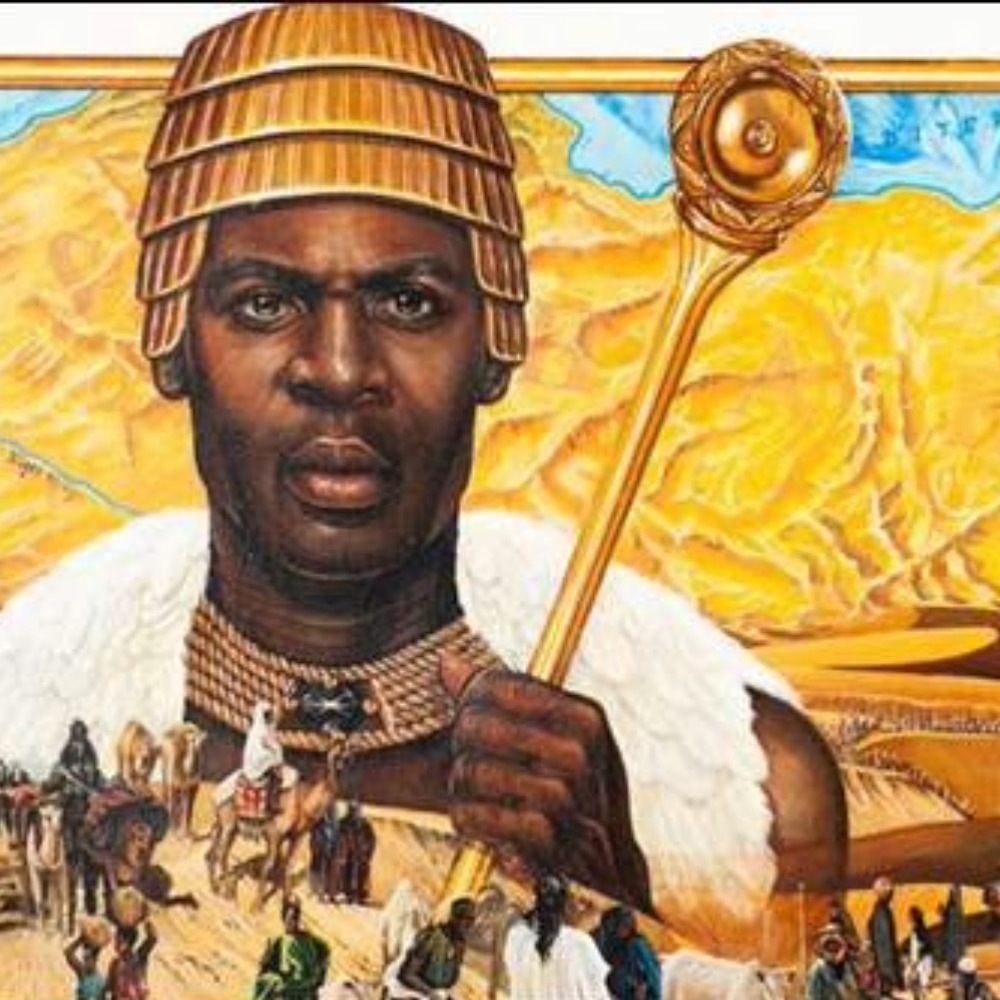
Sundiata Keita
Source: https://www.afrikaiswoke.com/epic-of-sundiata-keita/
After victory at Kirina, Sundiata consolidated control over trade routes and resource zones that underpinned Mali’s wealth, notably access to goldfields and the Niger River trade network. He established administrative structures and delegated authority to trusted generals and local chiefs, creating a framework that allowed Mali to collect tribute, regulate commerce, and attract merchants to urban centers such as Niani. These institutional foundations enabled later rulers to expand Mali’s reach and economic influence across the western Sudan World History Encyclopedia.
Death and legacy
Sundiata is believed to have died around c. 1255 after a reign that focused more on consolidation than on continuous conquest. His legacy is twofold: as a historical state‑builder who created the territorial and administrative basis for Mali’s later prosperity, and as a cultural hero whose epic shaped Mandinka identity and political ideals for centuries. The Manden Charter and the oral corpus associated with Sundiata continue to be invoked as symbols of law, social order, and collective memory.
References
- Sundiata Keita, Wikipedia: https://en.wikipedia.org/wiki/Sundiata_Keita Wikipedia.
- “Sundiata Keita | Biography, Facts, & Empire”, Encyclopaedia Britannica: https://www.britannica.com/biography/Sundiata-Keita Britannica.
- “Sundiata Keita”, World History Encyclopedia: https://www.worldhistory.org/Sundiata_Keita/ World History Encyclopedia.


latest video


nia via inbox
Stay connected. Subscribe and get updated on what's new with Nia!