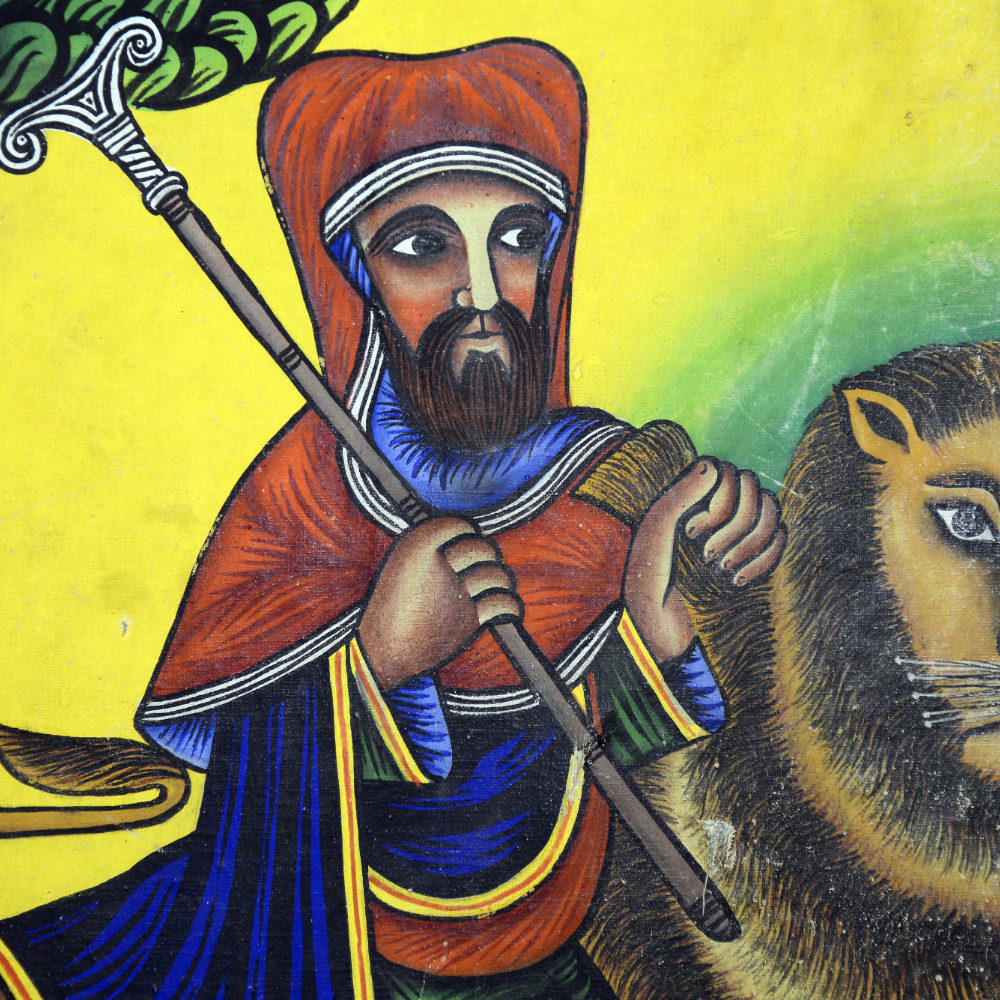
King Lalibela – A Biography
Lalibela was a Zagwe dynasty king credited with commissioning the rock‑hewn churches that created a symbolic “New Jerusalem” in Ethiopia; he ruled in the late 12th–early 13th century and combined religious patronage with policies that reinforced royal legitimacy and regional stability.
Beginnings and historical context
King Gebre Mesqel Lalibela ruled during the Zagwe dynasty at a moment when the older Aksumite political order had fragmented and regional Christian polities were consolidating power in the Ethiopian highlands. Traditional chronologies place his reign in the late twelfth to early thirteenth century, though exact dates remain debated. The Zagwe rulers claimed continuity with earlier Christian kingship while also seeking new forms of legitimacy; Lalibela’s monumental building program can be read as a deliberate royal project to anchor spiritual authority in a monumental, locally produced sacred landscape. Political motives, shifting pilgrimage routes, and the desire to create a proximate “New Jerusalem” after access to the Holy Land became difficult all shaped the context for his architectural patronage.
Who Lalibela was
Gebre Mesqel Lalibela (regnal name meaning “Servant of the Cross”) is remembered in hagiographic sources and later chronicles as a pious and charismatic monarch who combined royal authority with intense religious devotion. Hagiographies portray him as a saintly figure who undertook pilgrimages, practiced ascetic devotion, and cultivated close ties with the Ethiopian Orthodox clergy. Whether read as historical biography or as sanctifying legend, these accounts present Lalibela as a ruler who used religious patronage to consolidate political power and to shape a distinctive national religious identity.
The rock hewn churches and architectural program

Lalibela Complex
The Lalibela complex comprises eleven principal monolithic churches carved directly from volcanic tuff, arranged in two main clusters separated by a trench that symbolically represents the Jordan River. The churches were produced through a subtractive technique: masons and laborers cut downward from the rock surface to create freestanding interiors, courtyards, trenches, and connecting passageways. The program includes both free‑standing monoliths, such as the Church of Saint George, and semi‑attached structures connected by tunnels, courtyards, and processional passages. Architectural features combine local building traditions with broader Christian architectural vocabularies: barrel vaulting, cruciform plans, carved columns, and intricately worked doorways. Evidence of phased construction, reused masonry, and stylistic variation suggests the complex evolved over time and involved multiple campaigns of work and diverse artisan groups.
Construction, labor, and material culture
Sundiata is believed to have died around c. 1255 after a reign that focused more on consolidation than on continuous conquest. His legacy is twofold: as a historical state‑builder who created the territorial and administrative basis for Mali’s later prosperity, and as a cultural hero whose epic shaped Mandinka identity and political ideals for centuries. The Manden Charter and the oral corpus associated with Sundiata continue to be invoked as symbols of law, social order, and collective memory.
References
- Sundiata Keita, Wikipedia: https://en.wikipedia.org/wiki/Sundiata_Keita Wikipedia.
- “Sundiata Keita | Biography, Facts, & Empire”, Encyclopaedia Britannica: https://www.britannica.com/biography/Sundiata-Keita Britannica.
- “Sundiata Keita”, World History Encyclopedia: https://www.worldhistory.org/Sundiata_Keita/ World History Encyclopedia.


latest video


nia via inbox
Stay connected. Subscribe and get updated on what's new with Nia!